

Hearthstone
Blizzard Entertainment, Inc.
I came back to Hearthstone expecting the usual short burst of curiosity that most digital card games provide. Instead, I found a game with an unusually strong first-week pull and a much more complicated question after that: does it deserve a regular place on my phone once the novelty wears off? My answer is yes, but only for players who enjoy learning a living card game, adapting to change, and treating losses as part of the entertainment rather than as wasted time.
Developed by Blizzard Entertainment, Inc., this free card game puts quick matches, deck decisions, and constant experimentation at the center of the experience. It is rated Teen, runs on Android from version 9 onward, and includes optional purchases ranging from $0.49 to $199.99 per item. That last detail matters because the game is easy to start without paying, but the long-term relationship with it depends heavily on how comfortable you are with collecting cards and resisting the urge to spend when you want to catch up.
Why the first week feels so inviting
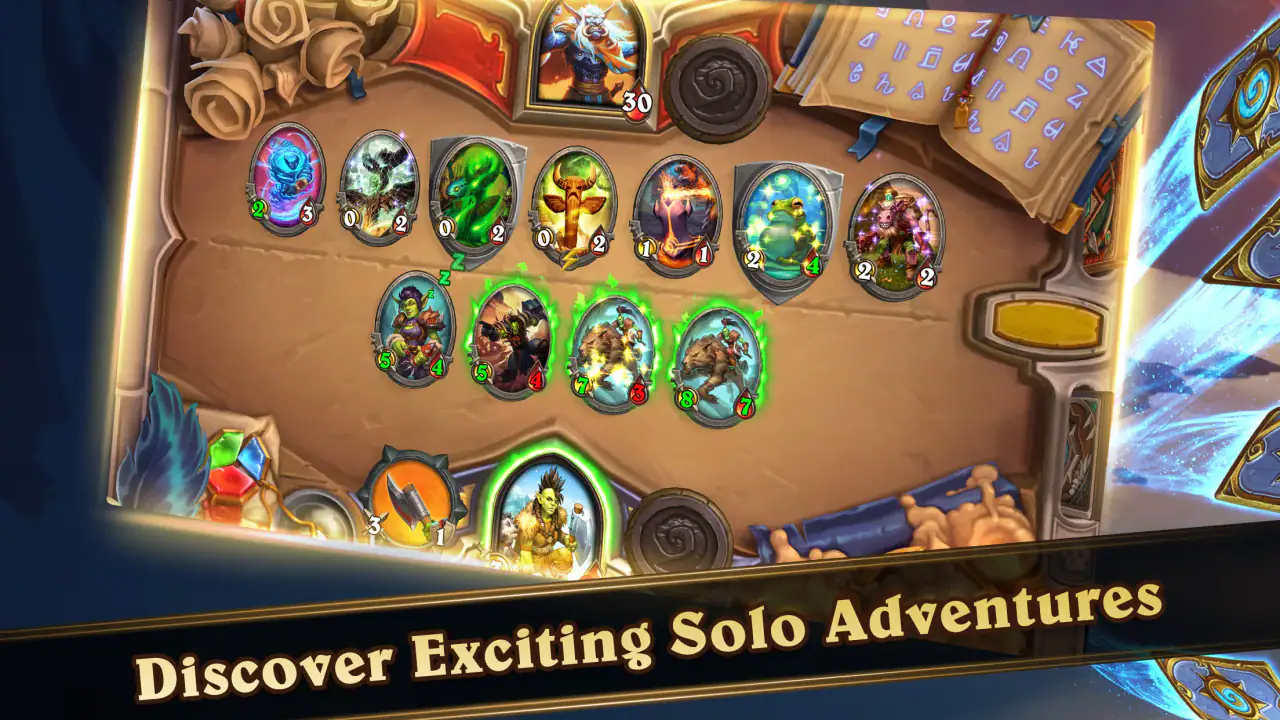
The opening appeal comes from how quickly a match becomes understandable. You choose a class, play cards, manage a limited resource each turn, and try to create a better sequence than your opponent. The rules are approachable enough for a newcomer to follow, yet the card interactions create room for surprises. I never needed to understand every possibility before enjoying my first games, which is an important advantage over more demanding strategy card games.
The presentation also does useful work. Cards have recognizable identities, turns move along at a comfortable pace, and the game communicates important actions clearly. That makes it suitable for a short break: I can play a match while waiting for an appointment without needing to commit an entire evening. At the same time, a supposedly simple turn can contain several decisions, so the experience does not feel like a mindless tap-through once I become familiar with the basics.
What hooked me most was the gap between knowing what a card does and knowing when to use it. A powerful effect is rarely powerful in isolation. It may be better to save it, combine it with another card, or accept a smaller immediate gain to protect a later turn. That learning curve gives the first week a satisfying rhythm. I start by copying obvious plays, then gradually notice why experienced opponents make choices that initially look less impressive.
Related News

Why WhatsApp Messenger Still Makes Everyday Communication Feel Easy

Jurassic World: The Game Is the Better Dino Tycoon for Strategic Players

Threads in Real Life: Who Should Join, Lurk, or Leave

How SHEIN Turned Shopping Into an Endless Content Feed

How to Make Fortnite Feel Smarter on Mobile

Should You Switch to Microsoft Outlook on Mobile?
New players should resist the temptation to judge their ability by one unlucky run. Card games naturally include draws that do not cooperate, and Hearthstone can make a poor opening hand feel especially painful when the opponent develops a strong board first. I found it more productive to ask whether I had a better alternative on each turn than to focus only on the final result. That mindset turns early losses into practical lessons instead of reasons to uninstall.
Learning without drowning in information
The biggest early challenge is not the basic rule set; it is the amount of knowledge accumulated by regular players. You will meet cards, combinations, and patterns that you have not seen before. The game can therefore feel fair in its rules while still feeling unfamiliar in its possibilities. I recommend spending the first sessions testing one or two styles rather than trying to understand every class at once. Concentration makes it easier to recognize mistakes and decide what kind of deck actually suits you.
There is also a useful distinction between playing for discovery and playing to win efficiently. Experimenting with unusual cards is entertaining, but it can produce inconsistent results. A focused deck is better when I have limited time and want a reliable match, while a homemade deck is more rewarding when I am willing to accept rough edges. Keeping those purposes separate prevents me from blaming the game for a deck that was built mainly for amusement.
Gallery
Compared with a physical trading card game, the digital format removes setup, shuffling, and the need to find an opponent in person. Compared with a simpler mobile card game, it asks more of my attention and gives me more ways to make a meaningful mistake. Players looking for a passive game should choose something lighter. Players who want a compact strategy session with a strong sense of personality will find a better fit here.
What keeps the game useful from month to month
Hearthstone’s lasting value comes from the fact that there is rarely only one way to enjoy a session. I can focus on improving a familiar deck, explore a different class, play casually when I have a few minutes, or set a personal goal such as making fewer rushed decisions. That variety matters because the core action is still card combat; without alternate reasons to return, even a polished match system would become repetitive.
The game has attracted more than 50 million installs and carries an average rating of 4.1 from around 2 million ratings, with roughly 65 thousand written reviews. Those figures suggest a broad and active audience, but they should not be mistaken for a promise that every player will enjoy the long-term loop. A large community helps with finding opponents and discussing strategies, yet it also means the average player is facing a deep pool of accumulated knowledge.
For me, the strongest monthly habit is reviewing decisions rather than simply grinding matches. After a close loss, I can identify the turn where I spent resources too quickly, played around the wrong threat, or failed to plan for the next turn. This small review habit is more valuable than chasing wins without reflection. It also makes progress feel personal, even when the broader game environment changes.
How to build a sustainable routine
I would not recommend treating every daily opportunity as an obligation. The game is healthier when I decide in advance what I want from a session. A short session might mean playing a few focused matches with a known deck. A longer session might be reserved for testing changes and learning unfamiliar interactions. When I enter without a goal, I am more likely to continue after the fun has ended simply because the next match is available.
One practical approach is to keep a small rotation of decks or play styles rather than rebuilding everything whenever the environment shifts. One deck can serve as a dependable choice for learning matchups, while another can be a creative project. This reduces the pressure to own or understand every possible card. It also gives me a clearer way to tell whether I am genuinely bored or merely tired of one particular strategy.
The game is free to download and play, which makes trying it straightforward. The difficult question is collection management. Optional purchases can accelerate access to cards or content, but spending does not automatically provide better judgment. I would set a firm personal limit before buying anything, especially if the goal is simply to compete more quickly. A player who dislikes in-game spending pressure should approach the collection side cautiously and enjoy the game at a slower pace.
Where recurring value meets recurring work
The environment’s movement is both a strength and a maintenance cost. A deck that feels excellent today may become less comfortable after changes in the wider card pool or after players learn how to counter it. That keeps the game from becoming solved, but it also means that returning after a long break can be disorienting. I would expect to spend time relearning the current landscape rather than immediately performing at my old level.
That maintenance burden is manageable if I enjoy the process of tuning. It is frustrating if I want a stable board game that behaves almost the same every time I open it. The game rewards attention to card interactions and current habits among opponents, so it naturally favors players who like staying involved. Someone who only wants a familiar five-minute diversion may find the updating environment more work than it is worth.
Another hidden cost is mental energy. Matches are short enough to invite “one more,” but close games can demand real concentration. If I am distracted, I may miss a sequencing opportunity or spend a resource without considering the opponent’s likely response. That is not a flaw in the design; it is a reminder that the game is more strategic than its mobile format suggests. I get better sessions when I play alert rather than using it as background entertainment.
What causes fatigue after the novelty fades
The first source of fatigue is repetition inside variety. Classes, cards, and strategies can change, but the fundamental loop remains: draw, plan, spend resources, respond, and try to secure an advantage. Players who need constant mechanical novelty may eventually feel that new combinations are decorating the same central activity. I can tolerate that because I enjoy decision-making, but I understand why someone else might prefer a game with more dramatic changes between sessions.
The second is the emotional swing between a brilliant win and a match that feels decided before I can recover. Card games naturally produce uneven experiences, and Hearthstone’s polished presentation can make those swings feel especially immediate. I have learned to separate a bad match from a bad evening. If I keep playing while irritated, I usually make worse decisions and turn a temporary frustration into a longer one.
Collection pressure can add another layer of fatigue. Even when purchases are optional, seeing an appealing strategy that I cannot immediately assemble may make the free path feel slower. This is where expectations matter. If I treat the game as a long-term hobby and enjoy gradually improving a limited selection, the slower pace can be acceptable. If I want instant access to every interesting option, the cost range of the in-app purchases becomes a serious concern.
The social side can also be a mixed experience. A large player community means the game does not feel abandoned, but a mature competitive environment can be intimidating. Many opponents know the common patterns and punish obvious mistakes quickly. I would not recommend entering with the expectation that the game will always match me against people at exactly my level. New players need patience while their knowledge catches up with the matchmaking experience.
Who should make room for it, and who should skip it
I recommend Hearthstone to someone who enjoys card strategy but wants the convenience of a phone or tablet. It is particularly good for players who like learning through repeated matches, refining decisions, and switching between reliable plans and creative experiments. It also suits people who appreciate a game that can fit into a short break but still reward deeper attention when they have more time.
I would skip it if you dislike losing to interactions you did not anticipate, have no interest in learning a changing card pool, or want a fully predictable offline experience. It is also a poor match for anyone who feels uncomfortable around optional purchases and collection progression. A simpler solitaire-style card game is better for relaxation, while a traditional physical deck may be better for someone who values tangible cards and face-to-face play more than convenience.
For a realistic everyday scenario, imagine having twenty minutes after lunch. I would open the game with one familiar deck, play a match or two, and stop if I noticed myself making hurried choices. That gives me a meaningful break without turning the game into an all-day task. On a weekend, I might instead use the same time to test a different approach and reflect on which decisions created problems. The important part is that the game supports both habits, provided I choose the purpose before starting.
My long-term verdict
After the opening excitement fades, Hearthstone earns lasting space through decision depth, quick access, and the satisfaction of gradually understanding its card interactions. Its free entry makes experimentation easy, while its mature community and broad card pool give committed players plenty to study. The game’s value is not just in collecting cards; it is in learning why a modest-looking play can matter several turns later.
That value comes with conditions. The game asks for ongoing attention, patience with unfamiliar strategies, and restraint around optional spending. Its recurring updates and evolving environment keep matches from becoming completely static, but they also create maintenance work for anyone who wants to remain competitive. I would not install it expecting a set-and-forget pastime.
My recommendation is strongest for players who want a long-running card hobby rather than a disposable mobile distraction. I would start free, focus on a small number of classes, and avoid buying anything until I understood which style I genuinely enjoyed. If that process sounds appealing, this is a game that can remain interesting well beyond its first week. If it sounds like homework, the polished first impression will not be enough to make it a good long-term choice.
Hearthstone is at its best when I treat each match as a compact puzzle, not as a demand for constant progress. Used that way, it still feels worth returning to: familiar enough to enter quickly, deep enough to reward attention, and honest enough to punish careless habits. It does not suit everyone, but for the right player, it can become a durable part of a mobile gaming routine rather than another briefly entertaining download.
FAQs for Hearthstone
What is Hearthstone and how do I play it?
Hearthstone is a free-to-play digital collectible card game developed by Blizzard Entertainment. Players build decks from a growing collection of cards and engage in turn-based matches, aiming to reduce their opponent's health to zero. It's a strategic game that involves careful planning and adaptability, making each match unique.
Is Hearthstone free to play or does it require purchases?
Hearthstone is free to download and play. However, players can purchase card packs, adventures, and cosmetics to enhance their experience. While purchases can provide additional content and faster deck-building opportunities, they are not necessary to enjoy the game fully, as players can earn rewards through gameplay.
What platforms is Hearthstone available on?
Hearthstone is available on multiple platforms, including Windows, macOS, iOS, and Android. This cross-platform availability allows players to enjoy the game on both desktop and mobile devices, with progress seamlessly synced across all platforms via a Battle.net account.
What are the system requirements for Hearthstone on mobile devices?
For Android, Hearthstone requires a device with at least 2 GB of RAM and running Android 5.0 or later. iOS users need iOS 12.0 or later, compatible with iPhone and iPad. Keeping your device updated ensures optimal performance and access to the latest features and content.
Can I play Hearthstone offline or is an internet connection required?
Hearthstone requires a stable internet connection to play, as it involves real-time matches against other players and syncing with Blizzard's servers. Offline play is not supported, so ensure you have a reliable connection to enjoy uninterrupted gameplay.
Pros
- Engaging and strategic gameplay.
- Regular updates with new content.
- Cross-platform play available.
- Visually stunning graphics.
- Easy to learn for beginners.
Cons
- Can be expensive for in-game purchases.
- Requires a stable internet connection.
- Occasional balancing issues.
- Some decks can dominate the meta.
- Resource-intensive on older devices.


